AI Chatbots
Custom GPTs, AI Chatbots, and the Future of Customer Engagement

suzanne
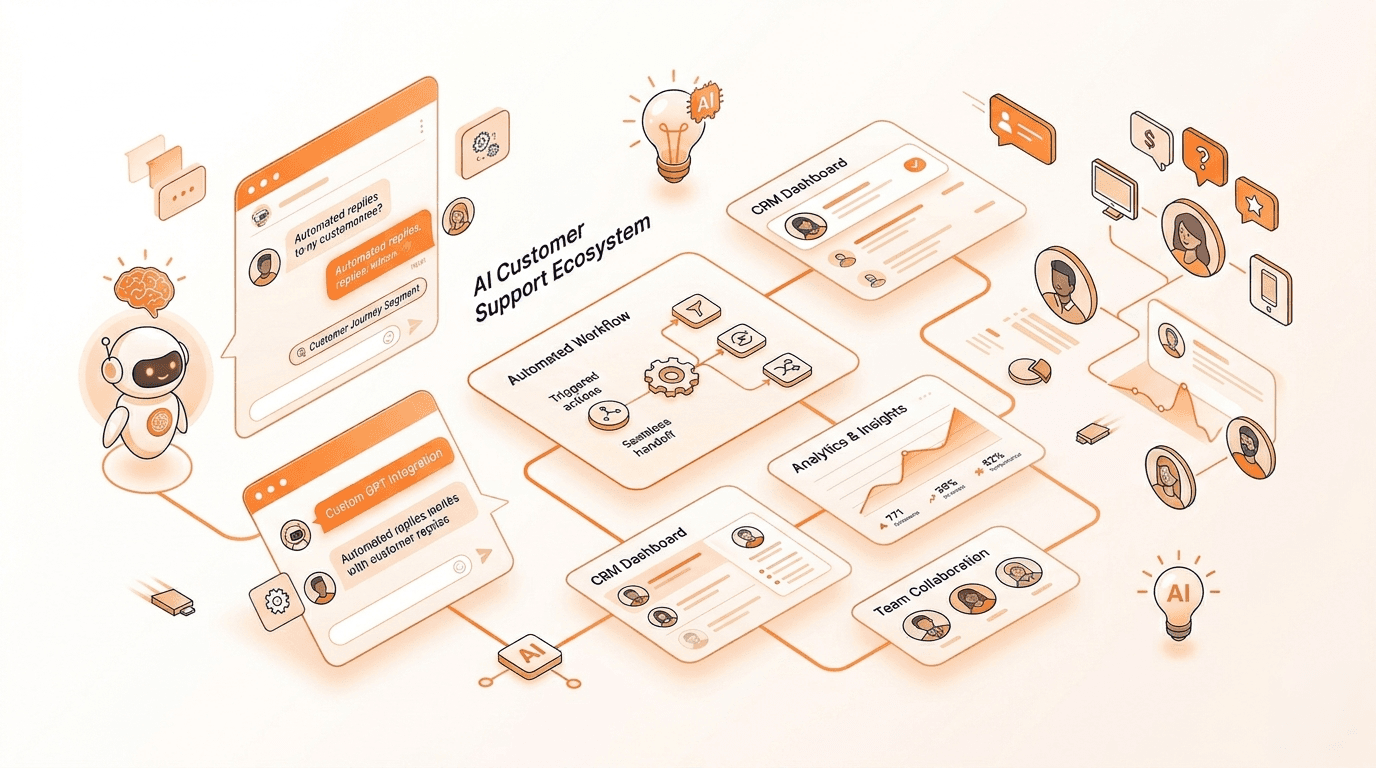
AI Is Transforming Customer Interaction
Artificial intelligence is rapidly reshaping how businesses communicate with customers.
From AI-powered search to conversational shopping experiences, organizations are discovering new ways to improve engagement, automate workflows, and personalize digital interactions.
One of the biggest developments is the rise of custom AI assistants.
Platforms like ChatGPT, Gemini, and Claude now allow businesses to create specialized AI experiences tailored to their own expertise, products, and services.
For organizations focused on growth, this creates exciting new opportunities.
What Are Custom GPTs?
Custom GPTs are specialized AI assistants built around a specific purpose or knowledge area.
Instead of relying on a general-purpose AI system, businesses can create AI tools trained on:
Internal documents
Product catalogs
Training materials
Brand messaging
PDFs and spreadsheets
Knowledge bases
FAQs and support content
These AI assistants can then provide highly focused responses based on the organization’s expertise.
For example, a company could create:
A product recommendation assistant
A membership support chatbot
An employee handbook assistant
A training and onboarding tool
A customer service knowledge assistant
Different AI platforms use different names:
ChatGPT uses “GPTs”
Gemini uses “Gems”
Claude uses “Artifacts”
While the terminology varies, the concept remains the same.
Internal AI Tools Can Dramatically Improve Efficiency
One of the most practical uses of custom AI systems is internal workflow automation.
Businesses are beginning to use AI to simplify repetitive operational tasks.
For example, organizations can build AI assistants that:
Generate proposals
Draft reports
Create presentations
Summarize meetings
Automate customer follow-ups
Organize project workflows
A proposal-generation GPT might:
Pull information from uploaded templates
Analyze prospect requirements
Generate branded proposals automatically
Export polished PDFs
Trigger follow-up workflows
This significantly reduces manual work while improving consistency.
Connecting AI to Business Systems
The true power of AI emerges when businesses connect multiple tools together.
Modern AI workflows can integrate with:
CRM systems
Project management tools
Email automation platforms
Zoom meetings
Task boards
Analytics systems
Ecommerce platforms
Instead of isolated software subscriptions, organizations can create connected ecosystems that automate repetitive processes.
This creates:
Faster workflows
Better collaboration
Improved customer experiences
More efficient operations
Businesses are increasingly realizing that AI is not just about content generation.
It is about operational transformation.
AI-Powered Search on Websites
Traditional website navigation and keyword search tools often frustrate users.
Visitors frequently struggle to:
Find products
Discover resources
Navigate large websites
Locate answers quickly
AI-powered website assistants are changing that experience.
Conversational AI tools allow users to interact with websites naturally.
Instead of searching through menus, users can simply ask questions like:
“What products work best for beginners?”
“What courses should I take first?”
“What membership plan is right for me?”
The AI assistant can then summarize information and guide users toward relevant products, content, or services.
Why Conversational Search Matters for Ecommerce
AI-powered customer engagement tools create a more personalized experience.
For ecommerce brands, this can improve:
Product discovery
Customer satisfaction
Conversion rates
Retention
Average order value
AI assistants can also:
Recommend products
Identify shopping trends
Reduce abandoned carts
Support customer service teams
Deliver faster responses
Perhaps even more importantly, these tools provide valuable customer insights.
Businesses can analyze:
What customers search for
Which products users cannot find
Common customer frustrations
Emerging trends
Content gaps
This data becomes extremely valuable for marketing and merchandising strategies.
Authenticity Will Become a Competitive Advantage
As AI-generated content becomes more common, consumers are becoming increasingly selective about who they trust online.
Businesses that combine AI efficiency with genuine expertise will stand out.
Authenticity now matters more than ever.
Customers want:
Real expertise
Transparent communication
Human insight
Reliable recommendations
Organizations that use AI to enhance customer experiences — rather than replace authenticity entirely — will build stronger long-term relationships.
The Future of AI-Driven Customer Engagement
AI is no longer a futuristic concept.
It is already transforming:
Search
Ecommerce
Marketing
Customer service
Internal operations
Content strategy
Businesses that embrace AI thoughtfully can create more efficient workflows, more intelligent customer experiences, and more personalized interactions.
The organizations that succeed in the future will not simply adopt AI tools.
They will learn how to combine AI capabilities with authentic expertise, strategic thinking, and customer trust.
That combination will define the next generation of digital engagement.


More Articles
Transform How
Your Team Talks
Convert more customers with automation that responds the moment they reach out.